

Supercart Australia honoured with Innovation Award at Hume City Council Business Awards
The popular Supercart shopping trolley has been honoured with the Innovation of the Year award at the Hume City Business Awards held in Broadmeadows last night. The lightweight and easy to manouevre Supercart hybrid trolleys are developed and manufactured in Campbellfield, Victoria, from recycled Australian plastic diverting 154 x 2-litre milk bottles from landfill or recycling depots, leading the way in sustainable manufacturing.
Innovative Plastic Solutions (IPS), developers of the popular Supercart shopping trolley seen throughout Australian supermarkets, has been honoured with the Innovation of the Year award at the Hume City Business Awards held in Broadmeadows last night.
The annual awards recognise businesses throughout the Hume City for their achievements and contributions to the region and wider community. The Innovation Award is given to the business that has excelled in implementing new processes, or improving on old ones; creating a new market or new products.
Pictured left to right; Sally Williams, Louw Van Tonder, Rhu Tang, and Theodoor Steeman celebrate at the award ceremony.
Supercart hybrid trolleys are developed and manufactured in Campbellfield, Victoria, with the trolleys now found in supermarkets in Australia and New Zealand, where customers have enjoyed the lightweight, easy-to-manouevre trolleys to enhance the in-store customer experience.
“We’re very proud to be recognised for our focus on developing innovative and sustainable products for Australian consumers,” said IPS Managing Director Dean Lomas.
“Our story is about developing higher quality products whilst maintaining as small an environmental footprint as possible. Australians are loving our products, and we are delighted the Hume City Council supports businesses like ours, and many others, who contribute to a more sustainable future.”
Key points about Supercart Australia trolleys:
Each 180-litre shopping trolley is manufactured using recycled 154 x 2-litre milk bottles otherwise destined for recycling depots or landfill
Creating each trolley uses 49% less water than steel
They are made using 68% less energy and contain 48% less global warming potential than steel
They are up to 40% lighter than steel trolleys and are proudly made in Australia.
Supercart is one of the leading manufacturers of sustainable shopping trolleys and baskets in South Africa with a history dating back more than 20 years.
Supercart Australia Technical Director Louw Van Tonder said his organisation’s products were now in some of Australia’s largest supermarket chains and department stores.
“Whilst our trolleys do have a focus on sustainability, it’s the superior technology in our manufacturing that has resulted in this award for innovation” Mr Van Tonder said.
“We are committed to innovation and sustainability – it’s at the heart of everything we do and we are excited and proud to be recognised by the Hume City Council with this award. It’s brilliant for our team and our customers.”
“Like many Australian manufacturers we are concerned about our environment, its future, and the role we all play in creating positive change.”
Port Melbourne Grocer receives recycled hybrid trolleys
Another 10 hybrid shopping trolleys delivered and 1,320 2L milk bottles worth of plastic diverted from landfill. Congratulations to the Port Melbourne grocer on the new fleet. As featured in the Bayside Leader and Herald Sun.
The Port Melbourne Grocer has just received an order of Supercart Mini Hybrid Shopping Trolleys. In total the order diverts the equivalent of 1,320 2L milk bottles worth of plastic from landfill, or about 53kg of plastic which is a great effort for a small sized store. You can read the full story on Page 4 of the October 1st edition at the Bayside leader website.
Both the Port Melbourne Grocer and Brighton Grocer stores are part of the Reddrop group and are committed to the big push for a more sustainable future. They’re hoping that other supermarkets might follow their lead in reducing their impact.
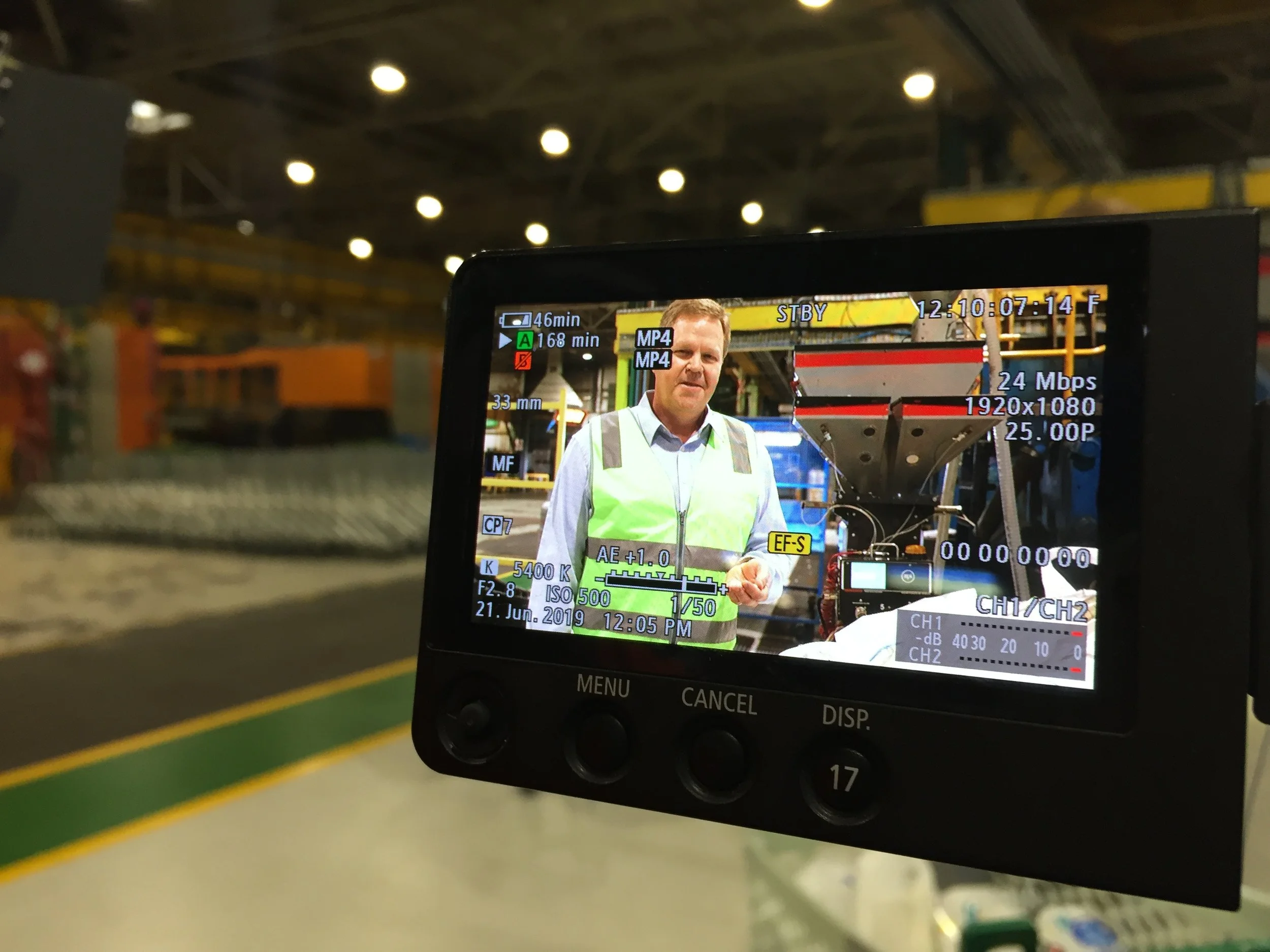
Inside the future of small format retailing
When Supercart Australia developed its suite of sustainable shopping trolleys and hand baskets it was with the customer experience at the heart of the design. In this interview Technical Director Louw Van Tonder shares his thoughts on small format retailing and what he believes will influence the shopping experience in the future.
When Supercart Australia developed its suite of sustainable shopping trolleys and hand baskets it was with the customer experience at the heart of the design. In this interview Technical Director Louw Van Tonder shares his thoughts on small format retailing and what he believes will influence the shopping experience in the future.
1. How can store equipment improve the retail experience in smaller format/convenience stores?
Anything that enables the shopper to have a better experience, including clear and accurate messaging around products within the store.
We’ve seen that the equipment that’s provided in smaller format stores does have a direct effect on sales.
For example, when we introduced a larger volume hand basket the sales within stores increased on average by 15 to 20 per cent by going from a 24-litre hand basket to a 30-litre hand basket.
That is a physical attribute that makes it easier for the consumer to purchase more. If you couple that with a message around an issue like sustainability, which we have done with our hand baskets and trolleys, then it ticks more boxes for the consumer who also cares about such issues.
2. What trends are currently influencing store equipment in smaller format/convenience stores?
Industry data shows that the trend is for more frequent shops. A lot of people are now shopping four to five times per week and in a lot of cases they shop daily, and sometimes even twice a day.
The trend is to pick up something on the way and prepare a fresh meal rather than have a bulk shop. These behaviours influence the equipment we use in the retail space.
3. What should a retailer look for when upgrading store equipment in smaller format/convenience stores?
They should be looking at the message they send to the consumer through the choices of products they make available in their stores, including equipment.
If you can source something locally, and you can source it through a sustainable supplier you are going to be sending great messages to your customers.
Consumers are more savvy now, and it’s important to understand that and create the right environment and right experience for them in-store.
4. How can your business help a retailer?
When we say source locally, Supercart is an excellent example. We create our products right here in Melbourne, and we are using recycled materials. Our approach saves plastic bottles from the oceans and landfill, and we’re very proud that people are getting behind our push for sustainability.
Our trolleys and hand baskets support the retailer in a number of different ways: we help improve the customer experience with trolleys that are very easy to use as well as being strong and durable, with longer life spans than traditional steel trolleys. Business owners benefit from larger volume hand baskets increasing sales, and they’ll also benefit from the sustainability message we promote. Our products create a positive experience for both the business and the consumer.
If you can make a trolley or hand basket light but large volume you will increase the sales per shop because data shows customers will often keep purchasing, even on impulse, when they have a larger volume trolley or hand basket they are using.
5. What are your predictions for the future of store equipment in smaller format/convenience stores?
The trends suggest stores will continue to develop to create a seamless experience for the consumer, making it easier for them to get in and out of stores and using their time efficiently.
The experience can be improved at the check-out, or even through electronic tagging of products that tags the price as it comes off the shelf rather than at a specific point like a traditional check out. Anything that improves the flow from entering the store to exiting the store will be an advantage, and there’s already a lot of innovation happening in that space.
People do not want to stand in a queue and pay, they need a more seamless experience. Our products will facilitate those technologies when they become available. We see that innovation as very important.
Some of the bigger retailers are already experimenting with this type of technology, and the feedback shows customers definitely want more control in their shopping experience. Waiting to be served or to reach a self-check-out is a gap that can be improved in the shopping experience.

The future of Australia's retail experience
The shopping trolley or hand basket is the first touch point a customer has with a store and the store’s brand. It is imperative that a fleet of aesthetically pleasing, well presented and maintained shopping trolleys and hand baskets are available to assist and enhance shoppers with their shopping experience.
Retail World recently asked Supercart Australia's executives for their thoughts on the future of the in-store retail experience. It's an ever-changing landscape with innovation and environmental consciousness becoming more important every day. In this Q&A Supercart Australia's Technical Director Louw Van Tonder shares his insights on the future of the industry.
How can store equipment improve the retail experience?
The shopping trolley or hand basket is the first touch point a customer has with a store and the store’s brand. It is imperative that a fleet of aesthetically pleasing, well presented and maintained shopping trolleys and hand baskets are available to assist and enhance shoppers with their shopping experience.
Supercart’s range of sustainably produced shopping trolleys (and soon sustainable hand baskets) provides retailers and shoppers alike with the following improved retail experiences:
- Made locally with sustainability in mind, it resonates well with shoppers as they push retailers to become more sustainable.
- Recyclable and environmentally friendly
- Contemporary, stylish design - an aesthetically pleasing shopping trolley to use
- An easier reach, making packing and unpacking of goods much easier and catering to a changing demographic.
- Prominent branding in corporate colours, with many branding options available
- Less likelihood of being stolen due to visibility and brand prominence
- Lighter, quieter and easier to manoeuvre. Hybrid trolleys are 30% to 40% lighter than the current imported steel trolleys
- One of the lowest ratio (weight to load carrying capacity) shopping trolleys currently on the market
- Being much lighter, they are easier to collect and transport back to the store by the trolley collectors, resulting in less injuries and Work Cover compensation claims
- Polymer construction results in less momentum required to push/pull them, resulting in less damage to cars and store fixtures, i.e. less claims as well as reduction in capital replacement costs
- Plastic is a poor conductor of heat and therefore the hybrid trolley will be much cooler to the touch when they are standing in the hot Australian sun for lengthy periods of time
- The baby/child seat is also more comfortable and softer to the touch than steel and therefore the baby/child will also have a more comfy and pleasant shopping experience
- Durable, rust-proof, providing many more years of life and service than the heavy, imported steel clunkers
- Won't bend, buckle or break like the steel trolleys are prone to
- No wobbling or jamming, with seamless nesting and de-nesting of trolleys, with the use of only one finger
- Longevity - replaceable parts results in extended shopping trolley life (up to three times longer than steel trolleys)
- RFID ready - compliant with shop RFID systems
What trends are currently influencing store equipment?
More retailers are investing in sustainable equipment such as solar to power their stores as well as using new energy efficient CO2 refrigeration systems. As global warming issues become a bigger threat, consumers will undoubtedly become more mindful of their purchases and will choose to align themselves with businesses that support their values.
From ethically sourcing goods and materials to using sustainable products and packaging, we can expect this trend to continue, with customers pushing for sustainable change. Therefore store equipment that’s made from recycled materials or which can be recycled, will be favoured.
Having a point of difference is another trend that retailers are looking for but finding hard to achieve. Supercart provides retailers with the following key points of difference:
- Quality, branded shopping trolleys made locally and sustainably from recycled plastic
- Shopping trolleys that look great, are more fun to use, providing shoppers with a unique shopping experience and that resonate well with shopper’s sustainability values
- Future ready and compliant with shop RFID systems (something which steel trolleys cannot achieve)
What should a retailer look for when upgrading store equipment?
Consumers are becoming increasingly mindful of their purchases as well as where and from whom they purchase. More and more shoppers are choosing products that are sourced responsibly and are good for their bodies and the environment.
Retailers that place health and sustainability at the core of their business will therefore continue to thrive.
Retailers should therefore look towards retail solutions that are truly sustainable and those that resonate well with shoppers as they become more focused towards sustainability and products that are environmentally friendly.
They should also consider aspects such as whether the store equipment is imported or available locally, the quality and longevity aspects of the equipment and whether it provides them with a niche or point of difference.
How can your business help a retailer?
The future is looking bright for those retailers who adapt to the needs of their customers and who are able to successfully evolve along with consumers. Evolving might mean exploring new store formats or revamping their selection. In essence it should be all about putting the customer first, and creating a more personal in-store experience. Our retail solutions are unique, providing retailers with many points of difference. They are produced locally from 100% Australian recycled plastic. They are quality products, made ethically according to Australian labour and environmental laws and more importantly are sustainably produced, utilising Australian waste plastic (something we all generate).
Every 1000 of our large trolleys diverts seven tonnes of plastic from going into landfill or our oceans. We are not just helping retailers, we are assisting councils and governing bodies with their environmental challenges as well as benefiting the country and planet.
What are your predictions for the future of store equipment?
Australia tends to lag behind when it comes to new equipment and trends in this area. Most overseas retailers have made the switch to hybrid shopping trolleys or those made from plastic. Supercart is already at the forefront of shopping trolley design and manufacturing, being the first company to make our hybrid shopping trolleys from 100% recycled plastic.